Materials
What Is French Terry Fabric? A Simple Guide for Clothing Buyers
French terry is a knit fabric with a smooth outer face and visible, unbrushed loops on the inside. Here is how to identify it and decide whether it suits your garment.
Short Answer
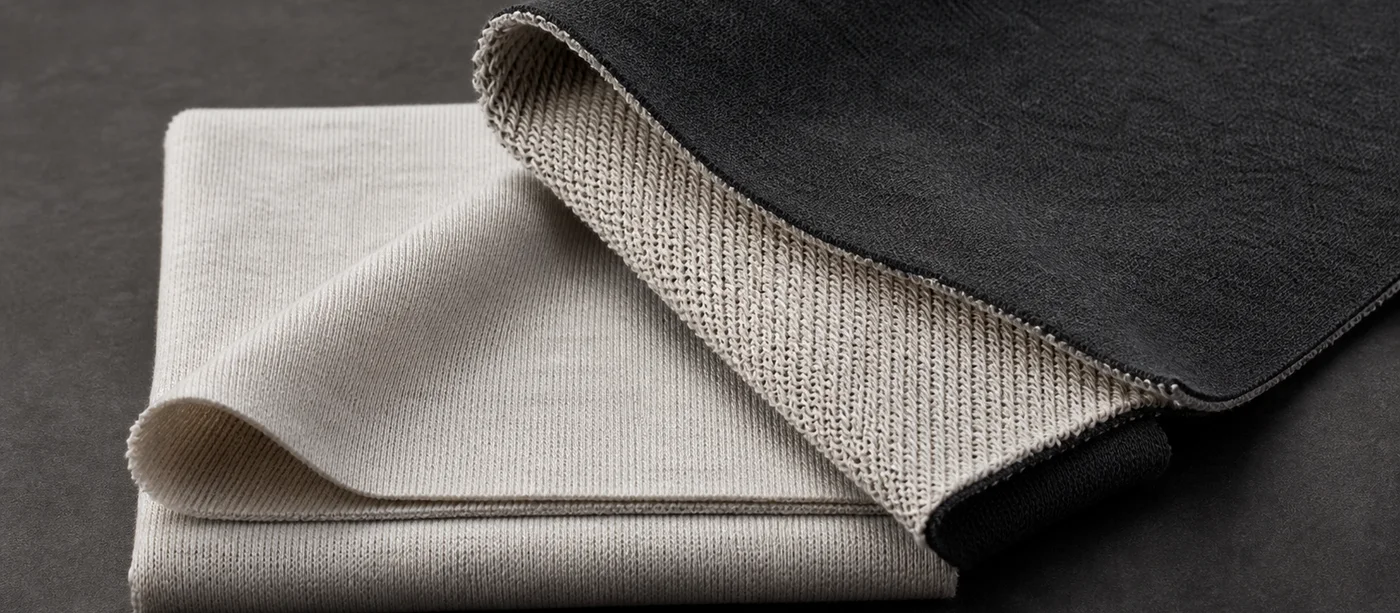
French terry is a knitted fabric with a smooth outer face and unbrushed loops on the inside. It is commonly used for hoodies, sweatshirts, joggers, shorts and other comfortable layers because it can provide structure without the fluffy interior of brushed fleece. The exact feel, warmth and performance still depend on its fibre composition, weight, knit construction and finish.
How can you identify French terry fabric?
Look at both sides of the fabric. The outside normally has a relatively smooth jersey-like face, while the inside shows small yarn loops or floats that have not been brushed into a fuzzy pile. This loopback interior is the clearest visual clue. The loops may be tight and fine or larger and more open, so two fabrics sold under the same name can still look and feel different.
French terry is a knit rather than a woven cloth. Knitted fabric is formed from interlocking yarn loops, which usually gives it more natural movement than a firm woven fabric. The structure can make French terry comfortable for garments that need to bend with the body, but the amount of stretch depends on the knit, yarns and whether elastane is included. The name alone does not promise a particular stretch level.
Do not identify it only by softness, thickness or a supplier's product name. A finishing treatment can make the face feel smoother, and fabric weight can change how substantial it feels. Ask for a physical swatch and inspect the back. If the inner loops have been raised into a fluffy surface, the material is better described as brushed fleece rather than unbrushed French terry.
Is French terry the same as towel terry?
No. The familiar bath towel normally has prominent absorbent loops across one or both surfaces and may use a woven terry construction. French terry used for clothing normally has a smooth face and shorter loops on the reverse. Both names refer to looped surfaces, but their structure, hand feel and intended products are different.
How is French terry different from fleece?
French terry and sweatshirt fleece can begin with closely related knit structures. The important difference is the treatment of the inside surface. French terry's inner loops remain visible and unbrushed. For fleece, the inner yarns are brushed or napped, meaning the surface is mechanically raised to create a soft pile.
That raised pile traps more air and usually makes fleece feel warmer and plusher. Unbrushed French terry normally feels less fluffy and can be more comfortable when a brand wants a layer that works across mild or changing conditions. These are tendencies, not guarantees. A heavy French terry can feel more substantial than a light fleece, while fibre choice and finishing can alter softness, breathability and drape.
Pilling also needs a product-specific review. Pilling means small fibre balls form on a surface through wear and rubbing. A brushed surface exposes more fibres, but pilling performance also depends on fibre length, yarn quality, blend, finishing and use. Buyers should compare tested samples instead of assuming every French terry will outperform every fleece.
Is loopback another name for French terry?
Loopback is often used as a practical retail or sourcing name for French terry because the reverse shows unbrushed loops. Supplier terminology is not always consistent, so the safest approach is to confirm the actual construction, composition, finished weight and surface treatment rather than relying on one name.
French terry and brushed fleece at a glance
These are general tendencies. Composition, weight, knit construction and finishing can change the final result.
| Feature | French terry | Brushed fleece |
|---|---|---|
| Inside surface | Visible, unbrushed loops | Raised, soft and fuzzy surface |
| Typical feel | Smooth outside with a textured loopback | Smooth outside with a plush inside |
| Warmth | Usually less insulating | Usually warmer because the raised fibres trap more air |
| Common uses | Hoodies, sweatshirts, joggers, shorts and layers | Cold-weather hoodies, sweatshirts, joggers and warm layers |
| Main buying check | Loop quality, stability, drape and shrinkage | Brushing quality, shedding, pilling, warmth and shrinkage |
What clothing is French terry used for?
French terry is widely used for hoodies, sweatshirts, joggers, tracksuits, shorts, casual sets and light layering pieces. Its smooth face can provide a clean surface for a garment, while the looped back adds body and comfort. Brands often consider it when they want more structure than a typical T-shirt jersey but do not want a deeply brushed winter interior.
The intended product still controls the decision. A relaxed hoodie may need enough weight and stability to hold its silhouette. Joggers need suitable recovery at the knees and seat. Shorts for warmer conditions may need a lighter, more breathable construction. A tracksuit may need coordinated stretch, drape and color across the top and bottom. For product-specific development, review the relevant tracksuit manufacturing considerations alongside the fabric choice.
French terry can also support printing or embroidery, but decoration must be tested on the chosen fabric. Weight, stretch, face smoothness, dye, finish and stabilisation can affect how artwork sits and how the surrounding fabric behaves. A generic statement that French terry is good for every print or embroidery method would ignore these variables.
Is French terry always made from cotton?
No. French terry can be made from cotton, synthetic fibres or blends. Cotton-rich versions are common because cotton can provide a familiar soft hand and moisture absorbency. Polyester may be blended in to change durability, drying behavior, dimensional stability or cost. Elastane may be included when the product needs more stretch and recovery.
Composition tells you which fibres are present and their proportions, but it does not describe the whole fabric. Two cotton French terries can differ because of yarn quality, yarn twist, loop length, stitch density, dyeing and finishing. Two cotton-polyester blends can also perform differently even when their fibre percentages match. Ask to review the actual fabric rather than approving it from the composition line alone.
The right blend depends on the garment, target market and care expectations. Cotton content does not automatically make one option premium, and polyester content does not automatically make another option poor. Buyers should evaluate the resulting hand feel, shrinkage, pilling, colorfastness, recovery and appearance after care. The site's broader materials guidance explains how composition and finish connect to product development.
Does GSM tell you whether French terry is good quality?
GSM means grams per square metre, a measurement of fabric weight. It tells a buyer how much one square metre of the cloth weighs. Within a similar construction, a higher GSM often indicates a heavier or more substantial fabric, but higher GSM does not automatically mean higher quality.
Quality also depends on fibre and yarn quality, knitting consistency, loop formation, finishing, shrinkage, pilling resistance, colorfastness and suitability for the intended garment. A lighter fabric that is stable, even and appropriate for warm weather may be a better product choice than a heavier fabric with poor recovery or an unsuitable finish. The existing fabric GSM selection guide explains how to evaluate weight by product and use.
GSM should be confirmed on the finished fabric because dyeing, washing and finishing can affect weight and dimensions. Buyers should also agree an acceptable specification with the supplier rather than treating one nominal number as a complete quality standard. The sample must show whether the selected fabric creates the intended fit, drape, opacity, warmth and hand feel.
What should a buyer specify before sampling?
A useful fabric request describes the intended result and the measurable requirements. Saying only 'French terry' leaves too many decisions open. Share the product type, target season or climate, desired hand feel, fit, structure, composition preference, color, finished fabric weight, stretch needs, surface finish and planned decoration. A reference garment can help communicate the target, but it should support rather than replace written specifications.
Ask for a swatch or fabric sample before approving garment development. Review it in the expected color and finish when possible. Then use the garment sample to judge the full result, because seams, rib, pattern shape, washing and decoration can change how the fabric behaves. The guide to apparel sample types explains how different samples support decisions before bulk production.
Record approvals clearly in the tech pack or specification. If the supplier proposes a substitute, compare it against the agreed requirements instead of accepting a similar name. For a broader preparation check, use the factory-ready tech pack checklist.
- Product type, intended use, target market and expected climate
- Fibre composition and any required stretch or recovery
- Finished GSM, knit structure and visible loopback requirement
- Color, dye or wash finish and acceptable appearance
- Target hand feel, drape, warmth, opacity and structure
- Shrinkage, pilling, colorfastness and care expectations
- Printing, embroidery or other decoration planned for the garment
- Approved swatch, sample reference and method for handling substitutions
Should you choose French terry for your garment?
Choose French terry when its smooth face, unbrushed loopback, weight and movement fit the product you are building. It can be a strong option for transitional hoodies, sweatshirts, joggers, shorts and tracksuits, but it is not universally better than fleece, jersey or another knit. Fleece may suit a warmer winter product. Jersey may suit a lighter T-shirt. Another structure may be better when the design needs different stretch, recovery or surface performance.
Make the decision by comparing physical options against the same brief. Consider climate, intended use, customer expectations, fit, drape, decoration, care, target cost and production behavior together. Then confirm the choice through sampling and documented approval. This is more reliable than choosing from GSM, composition or a fabric name in isolation.
S & H Global develops custom apparel and leather garments for buyer specifications. If you are preparing a hoodie, jogger or tracksuit project, share the product brief through the request a quote form so the fabric, sampling and manufacturing requirements can be reviewed together.
Frequently asked questions
Is French terry good for summer?
French terry can suit mild or warm conditions when its weight, composition and garment design allow enough comfort and airflow. A heavy construction may still feel too warm, so review the actual swatch and sample for the target climate.
Is French terry warmer than fleece?
French terry is usually less insulating than comparable brushed fleece because its inner loops are not raised into a pile that traps as much air. Weight, composition and finishing can change the comparison, so assess equivalent samples.
Does French terry shrink?
French terry can shrink, especially when its fibres, knit construction or finishing allow dimensional change during washing and drying. Buyers should request shrinkage information and confirm the finished garment through an agreed care and sample review.
Can French terry be used for oversized hoodies?
Yes, if the selected construction provides the intended structure, drape and recovery. Oversized fit comes from the pattern as well as the fabric, so evaluate both together in a garment sample rather than relying on weight alone.
Related resources
Continue planning
- Materials and fabric guidance Review how composition, weight and finishing affect apparel material choices.
- Fabric GSM selection guide Learn why fabric weight must be considered with construction and intended use.
- Apparel sample types Understand how sample stages support material, fit and production approvals.
- Factory-ready tech pack checklist Check the product and fabric information needed for clearer development.
- Tracksuit manufacturing See the product considerations for custom tracksuit development.
- Request a quote Share a product brief for a capability and manufacturing review.
Read next