Product Development
Apparel Sample Types Explained: Proto, Fit, Size-Set and Pre-Production Samples
Proto samples test the design and construction. Fit samples correct the pattern and measurements. Size sets check grading. Pre-production samples combine approved details into one reference before bulk production.
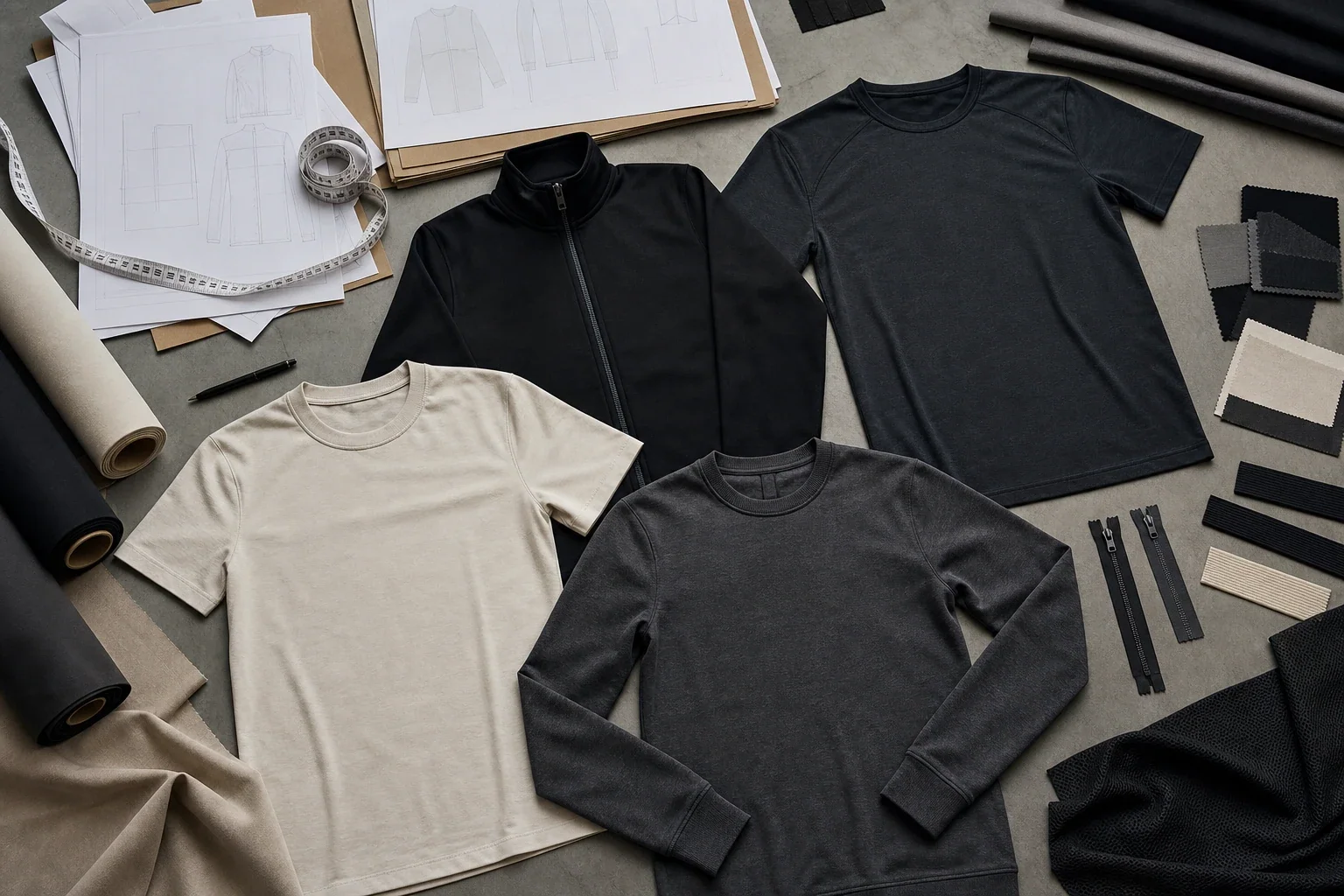
What are the main apparel sample types?
The main apparel sample types have different jobs. A proto sample tests whether the design and construction are workable. A fit sample is used to correct fit, balance and measurements. A size-set sample checks whether the approved pattern grades correctly across the size range. A pre-production sample, often called a PP sample or shortened to PPS, brings the approved production details into one reference before bulk production.
The important point is not the name alone. Brands and factories use sample terms differently. Before development starts, the buyer and manufacturer should agree the purpose of each sample, the materials expected in it, who can approve it, and whether approval allows the next stage or releases bulk production.
For custom, original equipment manufacturing (OEM), contract and private-label apparel manufacturing, sampling should reduce a specific production risk at each stage. An attractive first sample is not automatically a fit approval or a bulk-production standard.
- Proto: checks design interpretation, construction and whether the product can be made as specified.
- Fit sample: checks base-size pattern, points of measure, proportion, comfort and movement.
- Size set: checks grading and key measurements across agreed sizes.
- PP sample: checks the complete approved production specification before bulk is released.
A simple approval sequence
A common sequence is proto, fit, size set where needed, then PP sample. However, a simple repeat style may not require every stage. A new leather jacket, compression top, complex tracksuit or garment with multiple fabrics and trims may need more checks than a straightforward repeat T-shirt.
Choose stages based on what is changing and what can go wrong. If the main uncertainty is silhouette, start with a proto. If the base pattern is new, use a fit sample. If the grading is unproven, use a size set. If bulk materials, branding or packing differ from an earlier sample, use a PP approval gate.
Apparel sample types compared
Names and approval sequences can differ by product and order. Agree the purpose of each sample before development starts.
| Sample type | Main purpose | What the buyer checks | What it does not automatically approve |
|---|---|---|---|
| Proto | Test the first design interpretation and construction | Shape, panels, pockets, closures and basic function | Final fit, bulk materials or production release |
| Fit sample | Correct the base-size pattern and measurements | Fit, balance, movement and points of measure | The full graded size range or all production details |
| Size set | Check grading across agreed sizes | Measurements, proportions and placement by size | Unapproved materials, branding or packing |
| Pre-production sample | Bring approved production details into one reference | Pattern, materials, trims, branding, labels and finish | Any open exception that still requires separate approval |
A typical sample approval sequence
- 01Product brief
- 02Proto sample
- 03Fit sample
- 04Size set where needed
- 05Pre-production sample
- 06Written bulk release
Proto sample: test the product idea and construction
A proto sample, also called a prototype or development sample, is the first physical interpretation of the product brief. Its main purpose is to check whether the silhouette, panel layout, sewing construction, pockets, closures, rib, lining and artwork position match the brief.
At this stage, sample fabric and trims may be substitutes if the final materials are not yet available. That can be acceptable when everyone understands the limitation. A substitute fabric may show the construction but cannot reliably approve drape, shrinkage, recovery, color, opacity, leather handfeel or final trim appearance.
A proto should answer practical questions early. Does the pocket opening function? Does a zipper work with the selected seam construction? Do the panels create the intended shape? Is the garment buildable without changing the design intent? For leather outerwear, it may also expose issues with panel arrangement, lining, hardware placement and edge finishing.
- Review design interpretation against sketches and reference images.
- Check construction order, seam placement, components and basic function.
- Identify missing specifications and decisions that need buyer approval.
- Do not treat an early proto as final fit, color or production approval unless that was specifically agreed.
Proto sample versus fit sample
The difference is the decision being approved. A proto sample checks whether the garment design and construction match the brief. A fit sample checks whether the agreed base-size garment fits and measures correctly.
A proto can reveal obvious fit issues, but it is not usually the right reference for locking measurements. The pattern, fabric, construction and components may still change after the proto review.
Fit sample: approve the base-size pattern
A fit sample is used to evaluate the garment on the agreed base size. It focuses on the pattern and measurement specification: body width and length, shoulder position, sleeve shape, rise, inseam, leg shape, neckline, waistband, balance and other relevant points of measure.
Review fit on an appropriate fit model or body form where possible. Put the garment through the movements that match its intended use. A performance top may need checks for reach, stretch recovery, seam comfort and opacity. A tracksuit may need checks for top-and-trouser balance, rib recovery and ease. A leather jacket may need checks for shoulder mobility, sleeve pitch, chest ease and the effect of the lining and hardware.
The fit sample does not have to use final bulk fabric for every order. But material behavior matters. If the sample fabric differs substantially from the intended bulk fabric in weight, stretch, shrinkage, drape or thickness, fit approval should be treated as provisional until the intended material is checked.
- Measure the garment against the current measurement specification, not against memory or a photograph.
- Use clear points of measure and state the base size.
- Check balance, comfort, mobility and intended silhouette.
- Record pattern and specification changes before requesting a revised sample.
- Separate fit comments from color, artwork, trim and packing comments when those items are not yet final.
How to write fit comments that can be actioned
Avoid comments such as “make it better fitting” or “shorten slightly.” State the garment, sample version, size and location. Then give the current measurement, requested measurement or change, and the reason where useful. Attach marked images for visual details, but keep measurement decisions in the specification.
For example: “Base size M: reduce front body length by 2 cm at centre front; keep back length unchanged. Update the measurement sheet and revise the front pattern.” This is clearer than a chat message saying that the front looks too long.
Size-set sample: verify grading across the size range
A size-set sample is a group of garments made in selected or all agreed sizes after the base-size fit is approved. Its purpose is to confirm that pattern grading carries the approved shape, proportions and functional details through the size range.
A base size can fit well while another size shows problems. Neck openings may become disproportionate, pockets may sit too high or low, sleeve lengths may grade poorly, rises may not provide enough comfort, or artwork placement may look inconsistent. These issues are easier to correct before bulk cutting than after production has started.
A full size set is not necessary for every order. The right approach depends on the garment, size range, base pattern, fit sensitivity and grading risk. It is particularly useful for new blocks, extended size ranges, fitted performance apparel, trousers and styles with many placement-dependent components.
- Confirm the exact sizes to be sampled and whether every size is required.
- Measure key points of measure in each sample against the graded specification.
- Check proportions, component placement and functional ease, not measurements only.
- Confirm grade rules and revise the specification if grading changes.
- Keep the approved graded pattern version identifiable for production.
Fit sample versus size-set sample
The fit sample validates the base-size pattern. The size set validates the graded range. They are related but not interchangeable. Approving a size M does not prove that XS, XL or another agreed size will have the same intended balance and comfort.
For some orders, one base-size sample plus measurement grading review may be enough. For others, physical samples are the safer approval method. Agree the requirement rather than assuming that one practice applies to every garment.
Pre-production sample: create the bulk production reference
A pre-production sample, commonly called a PP sample or PPS, is the final sample approval before bulk production. It should bring together the approved pattern, size specification, construction, materials, colors, trims, labels, artwork, finishing and relevant packing details for the agreed production standard.
Where the PP sample is the bulk-release gate, it should use the agreed production-intended materials and components whenever possible. If an item cannot be final at that point, such as a specific packing component or trim, document the exception clearly and state what separate approval governs it. Do not allow an earlier fit sample to become the production standard by default when later materials or details have changed.
The PP review is a cross-functional check. Product, technical, sourcing, branding and quality teams may each own different decisions. One consolidated PP record prevents an approved fit from being paired with an unapproved label, artwork file, zipper, color reference or packing instruction.
- Current technical pack and measurement specification version.
- Approved base pattern and agreed grading rules.
- Bulk-intended fabric or leather, lining, rib and approved trims.
- Correct labels, care content, artwork, decoration method and placement.
- Approved color references and finish expectations.
- Relevant folding, polybag, hangtag, barcode or carton instructions where these form part of the approval.
- A written bulk-release decision, or a list of explicitly controlled open items.
Is a PP sample the same as a sealed, golden or master sample?
These terms are often used for a retained approved reference, but they are not universal legal or technical definitions. A buyer may call the signed PP sample the sealed sample, golden sample or master sample. Another order may use a separate sealed sample after PP approval.
What matters is documentation: identify the sample type, style, colorway, size, version, approval date, approved deviations and the documents that accompany it. State whether that exact sample is the reference for bulk production and quality review.
PP sample versus TOP sample
A PP sample is approved before bulk production is released. A top-of-production, or TOP, sample is taken from the early bulk-production flow. A TOP sample is therefore a verification of live output, not a substitute for a PP approval.
A TOP sample can show whether the first production garments match the approved standard using actual bulk processes and materials. It does not remove the need to resolve specification issues before bulk starts.
Which approval should release bulk production?
Bulk production should be released only by the sample and documents named in the approved sampling plan. For many orders, that is the PP sample together with the current tech pack, bill of materials (BOM), measurement specification, artwork files, color references and packing instructions. For a repeat style with no material, fit or trim changes, the agreed approval gate may be different.
The release decision should never depend on a vague statement that “the sample is approved.” Record the approved sample, style, colorway, size and document revision. List any open changes and state whether they block bulk cutting, sewing, decoration or packing.
S & H Global supports product development, sampling and bulk manufacturing for custom, OEM, contract and private-label apparel and leather garments. The required sample plan is confirmed against the product brief, materials, construction, customization and approval needs rather than assumed from one standard sequence.
- Name the governing sample type and sample ID.
- Link approval to the latest tech pack, BOM, measurement chart and artwork version.
- State whether approval is final, approved with comments, rejected or pending.
- List owner, due date and production impact for every open item.
- Keep one controlled approval record available to product, sourcing and production teams.
What does “approved with comments” mean?
Approved with comments can be useful only when the comments are controlled and do not create ambiguity. Record each change, its owner and whether the change requires a revised sample, updated pattern, new artwork approval or another review.
A comment that changes fit, material, construction, color, trim, branding, measurement or packing may affect production. Do not treat it as minor simply because the sample looks acceptable overall. The supplier and buyer should agree whether bulk can proceed and which reference remains controlling.
Build a sample plan before development starts
The best sampling process is not necessarily the longest one. It is the process that tests the real risks before the commitment to bulk materials and production. Start with a clear brief, identify the new or uncertain parts of the garment, and assign each sample stage a defined decision.
A complete product brief makes sample reviews faster because reviewers are comparing the garment to a shared standard. Before requesting the first sample, prepare the construction sketches, bill of materials, points of measure, size range, artwork files, label requirements and known packing needs. The factory-ready tech-pack checklist explains the core information to include.
Material decisions also affect sample planning. Fabric weight in grams per square metre (GSM) is only one part of behavior; composition, knit or weave structure, finish, shrinkage, stretch and recovery can all change how the approved pattern performs. Plan enough time for material evaluation and any required revised sample before releasing bulk.
- Define the sample stages, purpose, sample size and material expectation.
- Set one approval owner and a clear comment deadline for each stage.
- Use version-controlled documents rather than comments spread across email and messages.
- Confirm whether a revised sample is required after each material, fit or construction change.
- Do not schedule bulk around an assumed approval date; allow for review and revision cycles.
Frequently asked questions
Does every apparel order need proto, fit, size-set and PP samples?
No. The required stages depend on the style, whether the pattern is new, the fit and grading risk, material changes, customization and the agreed approval process. A repeat style may use fewer stages, while a new technical or leather garment may need more control.
Should a fit sample use final bulk fabric?
Not always. A fit sample can use sample material during early development, but fabric behavior can change fit. If bulk-intended fabric differs in stretch, weight, drape, shrinkage or thickness, confirm the fit again in the intended material before treating the approval as final.
Can a PP sample be approved while some details are still open?
Only if each exception is recorded clearly, has an owner and separate approval method, and its effect on bulk production is understood. Changes to fit, material, construction, trims, artwork, labels or packing can require a revised approval before the affected process begins.
Who should keep the approved production sample?
Agree this in the sampling plan. Buyers and manufacturers commonly retain identified approved references with the controlled approval documents. The important point is that the production and quality teams can access the same version and approved conditions.
Related resources
Continue planning
- Review the full manufacturing process See how a product moves from brief review and sampling through approvals, bulk production, quality checks and packing.
- Use the factory-ready tech-pack checklist Prepare drawings, BOM details, measurements, artwork, labels and packing requirements before sampling.
- Understand fabric GSM and material behavior Learn why weight must be reviewed with composition, structure, finish, shrinkage and intended use.
- Compare fabric and leather options Review current fleece, jersey, performance knit, technical woven and leather material examples.
- Plan quantities, approvals and timing Understand why sample review cycles and completed approvals affect production planning.
- Discuss product development and sampling Share your product brief, sample requirements, materials, sizing and target timing with S & H Global.
Read next