Production Planning
My Bulk Order Doesn't Match the Sample. What Went Wrong?
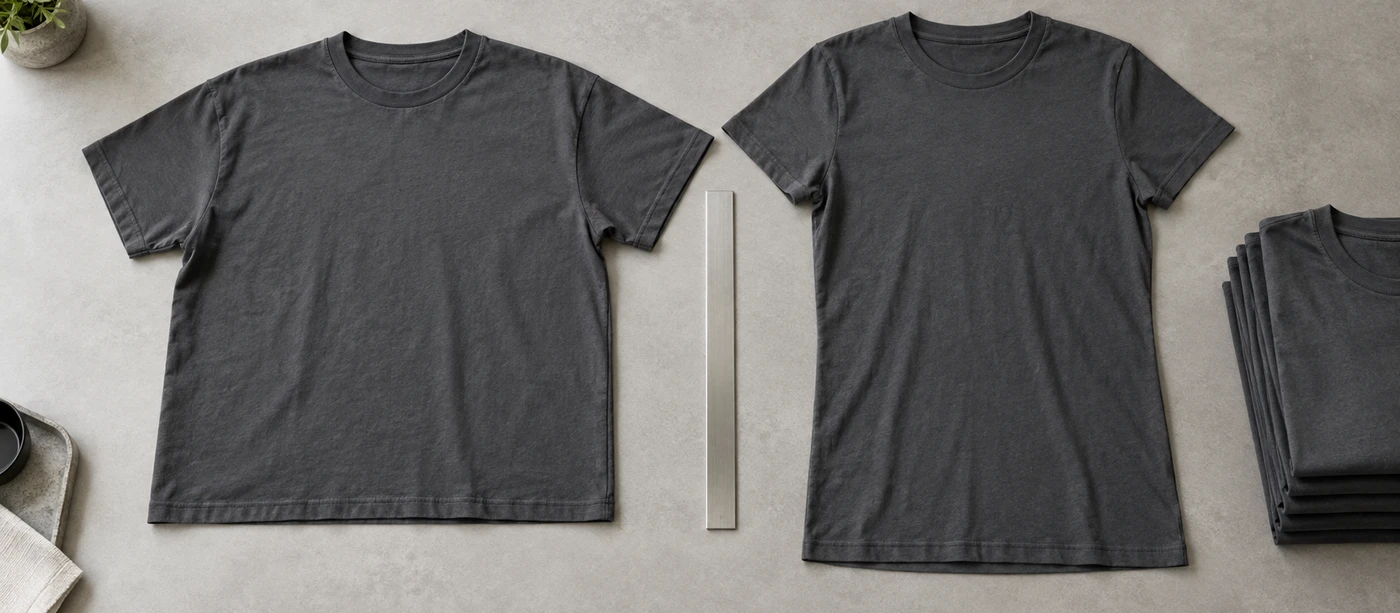
The sample was boxy. The delivery is slim. Before accepting an explanation or placing another order, find out exactly what changed and how far the problem goes.
Short Answer
If your bulk order doesn’t match the sample, first compare the delivered garments with the final approved sample and written specification under the same conditions. Record exactly what differs, identify which sizes and colours are affected, and ask the manufacturer to investigate before agreeing to a remedy. Possible causes include changed materials, an outdated pattern, missed revisions or inconsistent production work. A good sample shows what can be made; production checks help establish whether the order actually follows it.
The sample was right. Why is the delivery wrong?
You approved a relaxed, boxy T-shirt. The cartons arrive, you open one, and the tee is longer, narrower and a slightly different shade. Your product photos are ready, customers are waiting, and the garment in your hands is no longer the one you planned to sell.
This is a real founder question. In a Reddit streetwear discussion, a buyer described a bulk delivery with a different fit, white shade and label placement from the sample. That account does not prove why their order changed. It does show why “the quality is different” needs to become a more precise conversation.
For your own order, separate three questions: what was approved, what was delivered, and where the two stopped matching. Avoid deciding immediately that every unit is defective or that the difference is harmless. Both conclusions need evidence.
Did you approve the garment or just one part of it?
Find the approval message before opening a dispute about the product. Did it say the fit was approved, the print was approved, or the whole garment was ready for production? If the sample carried a temporary zipper or substitute fabric, was the final component approved separately?
A pre-production sample is the garment intended to represent the agreed product before bulk manufacture. Earlier development samples can answer narrower questions. Our guide to apparel sample types explains those different purposes.
For the next order, write a short approval record naming the sample, its date, the specification version and any exceptions. Ask the manufacturer to confirm that its production team holds the same information. If a sample and a measurement sheet disagree, resolve that conflict explicitly instead of expecting someone on the sewing floor to guess which one wins.
What changed: the fit, fabric or finishing?
Start with the feature that made you stop opening the carton. Put the reference and delivered garment together, confirm they carry the same intended size, and compare like with like. Photograph the whole garment first, then the specific difference.
A photo can establish a useful visual record, but it cannot establish fibre composition or reliably settle a subtle colour disagreement. Where the issue needs testing, agree what will be tested, which units will be used and what result would meet the order specification.
When the fit has changed
Measure both garments using the same method, with neither pulled or stretched into shape. Check the named measurement locations in your specification, such as chest width and body length. A tolerance is the permitted variation around a target measurement; it should already be agreed for each relevant dimension. The garment measurement tolerance guide explains how to make that comparison repeatable.
When the fabric feels different
Ask for the production fabric identity and compare it with the approved material record. Weight alone will not settle the question: yarn, fabric construction and finishing also shape how a garment feels. If the difference appears after laundering, keep an unwashed reference and compare items treated under the same care conditions. The fabric shrinkage guide covers the information a useful wash comparison needs.
Turn a vague complaint into a specific check
These are investigation starting points, not diagnoses or universal acceptance limits.
| What you notice | What to compare | What to ask |
|---|---|---|
| A boxy tee now fits slim | Chest width, body length and shoulder measurements in the same size | Which pattern and measurement sheet were used? |
| Fabric feels lighter or rougher | Approved swatch, fabric specification and production material records | Did the yarn, construction, finish or fabric source change? |
| The colour looks different | Garments together under the same lighting, against the agreed colour reference | Which dye lot and colour approval cover these units? |
| Labels or artwork have moved | Placement measured from the agreed seam or garment reference point | Did the production team receive the final placement revision? |
| Seams or closures fail | Affected units, defect location and construction specification | How will the affected stock be identified and checked? |
Was the final revision actually used?
One practical possibility to investigate is a version mismatch. You changed the chest width in a spreadsheet, approved the neckline in a message and sent the final label placement in a separate image. Ask the supplier to show the consolidated instruction used for this production run.
The purpose is not to reconstruct every conversation indefinitely. Create one comparison: approved requirement, production instruction and delivered result. If the production instruction already contains the wrong measurement, that tells you something different from a correct instruction followed inconsistently.
For future orders, give revisions a clear date or version number and identify what each revision replaces. The factory-ready tech pack checklist can help organise the garment specification, construction and branding details in one place. Request written agreement before any material or component substitution goes ahead.
What should you do when the delivery arrives?
Keep the affected stock separate while you investigate. Record which garments you checked and where they came from. A problem in one carton is a reason to investigate more widely, not a reliable estimate of the entire order.
Use this as an initial evidence checklist. For an acceptance decision on a larger shipment, agree a suitable inspection plan with a qualified inspector rather than treating a handful of conveniently selected pieces as representative.
- Keep the approved sample, latest specification, approval messages and order records together.
- Identify checked units by style, size, colour and carton where possible.
- Photograph matching views and measurement positions under consistent conditions.
- List the requirement, observed result and number of affected units among those inspected.
- Preserve original examples before washing, repairing or relabelling them.
- Ask the supplier for an investigation, proposed correction and response date.
What should you say to the manufacturer?
Lead with the mismatch and the evidence. A message such as “these look cheap” expresses frustration but leaves the next action unclear. A comparison sheet gives both teams something they can check.
Adapt this message: “We compared the delivered [style, size and colour] with approved sample [reference] and specification [version]. We found [specific differences] in [number checked and number affected]. Photos and measurements are attached. Please confirm which materials and production instructions were used, how you will establish the affected quantity, and your proposed correction and timing.”
If the answer is “we will fix it next order”, bring the discussion back to the current stock. Ask which units are usable, what can be corrected and how the correction will be verified. A promise about a future batch does not establish what happened to this one.
Should you accept a repair, remake or discount?
Treat each proposal as a product decision before treating it as a price decision. A misplaced label might be repairable, but inspect a corrected example for needle marks and appearance. A different body shape may need a more substantial solution. Ask to see the proposed result before agreeing to apply it across the stock.
A discount only helps if the garments still meet the product you can honestly offer customers. Compare the proposed saving with the work of sorting, checking and correcting the order, plus the disruption to your launch. Keep the agreed scope, affected quantities, responsibilities and completion dates in writing.
Do not assume that a refund, remake or credit is automatic. Establish the available resolution through your order terms and supplier or platform process. This article focuses on documenting the product difference, rather than predicting the outcome of a particular claim.
How do you catch the mismatch before shipping?
Build the next order around checkpoints with clear decisions. Before production, confirm the approved reference and written requirements. During production, check actual garments from the run. Before delivery, review the finished goods against the agreed inspection criteria.
Intertek describes inspection at pre-production, during-production and before-delivery stages. These stages serve different purposes: an early check can surface a problem while production is underway, while a final check reviews the shipment as prepared. A final inspection cannot undo work already completed.
Ask who selects the garments for review, what sizes and colours the check covers, how findings are recorded and who authorises the next step. One attractive photo of a finished tee does not tell you how the rest of the run compares.
For a new project, discuss the approval and inspection plan alongside the manufacturing brief. If you are preparing an order with S & H Global, share your product requirements so the sample reference, specification and proposed checks can be reviewed together.
Frequently asked questions
Does approving a sample guarantee identical bulk garments?
Approval establishes a reference. The order still needs agreed measurements, permitted variation, material requirements and checks during production. An approved sample alone cannot demonstrate that every delivered garment follows it.
Should I compare washed or unwashed garments?
Compare garments in the same condition. Keep original unwashed examples and document any washing procedure separately. Comparing a washed sample with an unwashed delivery can make the source of a difference harder to establish.
Should I change manufacturers after one bad order?
First assess the seriousness and extent of the problem, the supplier’s explanation and whether its correction can be verified. A documented mistake with an effective correction is different from repeated unexplained substitutions or refusals to investigate.
Related resources
Continue planning
Read next