Product Development
Tonal Embroidery on Hoodies: What Should Buyers Approve?
Subtle stitching needs more than a colour match. Review the sew-out, fabric, inside finish and wash result with a practical decoration approval sheet.
Short Answer
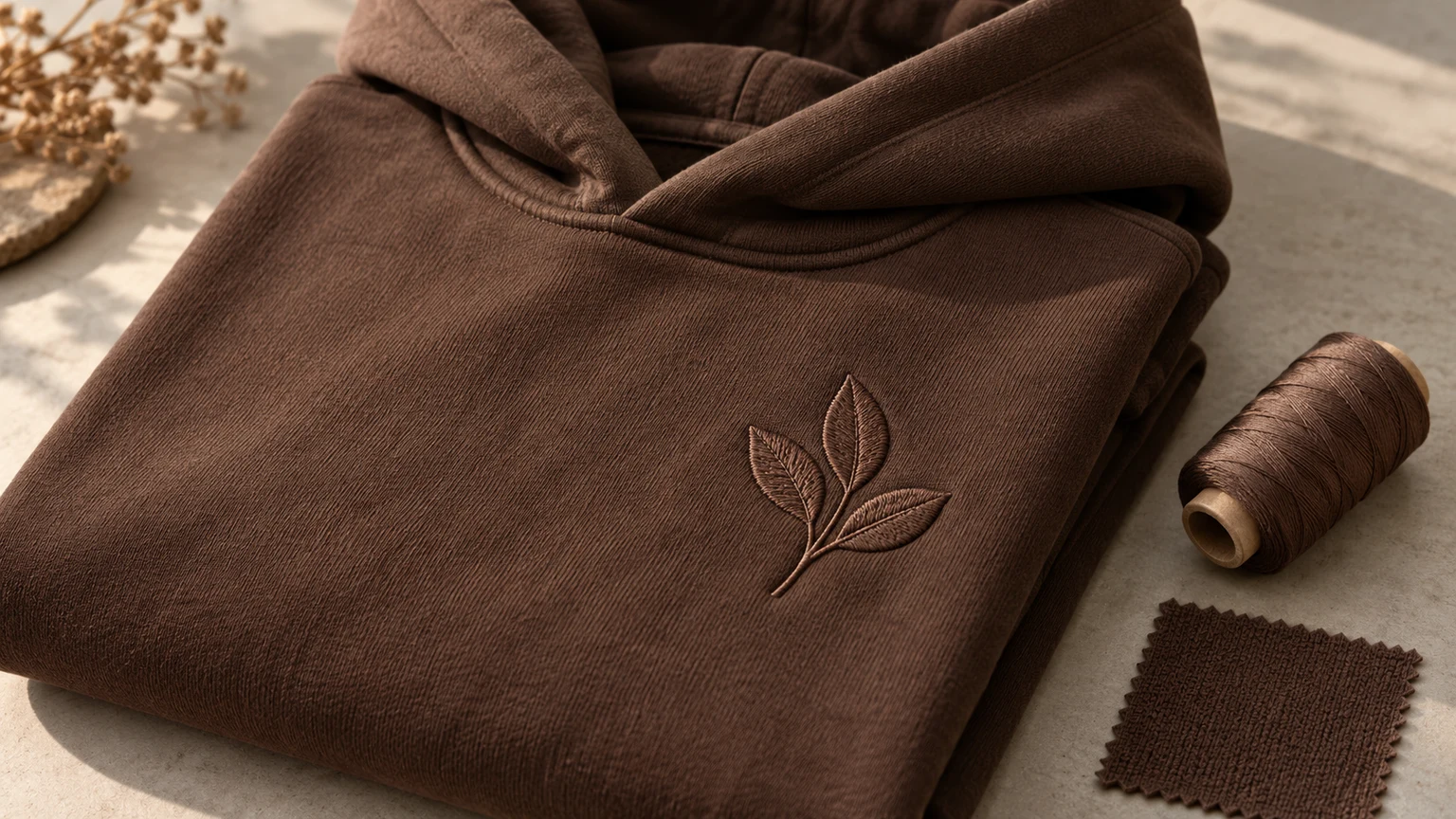
Approve tonal embroidery on a hoodie by reviewing the actual stitched design on the intended fabric and colour, then checking the inside finish and the result after agreed washing. Tonal embroidery uses thread close in colour to the garment, so visibility depends on texture and contrast as well as the artwork. Record the approved thread, design size, backing, placement and sample reference before releasing the decoration for production.
Why is tonal embroidery worth considering?
Subtle branding can suit a hoodie collection where the fabric and shape should lead. A small stitched symbol can add texture without a strongly contrasting graphic. The design still has to be recognisable at the distance and in the conditions your customer will actually see it.
For fall 2026, PPAI’s textured-apparel report highlights supplier interest in heavier textured fleece and tonal or near-tonal embroidery. This is trade commentary from the promotional-apparel market, not a measured increase in searches or a forecast of sales for your brand. It provides a reason to test the treatment, rather than a reason to order it without sampling.
The useful question is whether the decoration improves your particular garment. Assess three things separately: whether the design reads as intended, whether the surrounding fabric keeps its shape, and whether the inside remains comfortable. A sample can pass one of those checks while failing another.
How subtle should the finished design be?
Decide whether you want the motif to be obvious across a room, visible during a conversation or mainly noticeable up close. These are different visual targets. “Match the hoodie” does not tell a decorator which one you mean.
Compare physical thread options against the actual garment colour. Look straight at the sample, then from an angle. Check it in the lighting relevant to your product photographs and normal wear. Record the chosen thread supplier and colour reference, along with the approved stitched sample. Screen colours and an artwork preview cannot approve the finished texture.
When comparing options, keep the design, finished size and fabric constant so the colour treatment is the main difference. For example, review a close-match brown thread alongside a slightly lighter brown on the same cocoa fabric. This is a suggested comparison, not a universal colour rule or an S & H Global product specification.
Before requesting more contrast, ask whether the design itself is too complicated at that size. A simpler shape or a clearer space between elements may communicate better than adding thread to every gap. Let the embroidery specialist propose suitable stitch construction and confirm it through a physical trial.
What should a useful embroidery trial include?
Ask for a sew-out: a physical stitched trial of the design. It should identify the fabric, thread, finished dimensions and design-file version. A trial on a spare piece of unrelated cloth may show the general shape, but it cannot confirm the result on your selected hoodie material.
Digitising means converting artwork into instructions for an embroidery machine. Those instructions determine how the design is stitched; they are more than a resized picture. Review the stitch result rather than approving the digital preview alone. If you change the finished size or fabric, ask whether the file needs to be adjusted and tested again.
What can a fabric-piece trial approve?
A trial on the intended fabric is useful for comparing thread colour, detail clarity and the stitched area’s feel. Label it with the material reference and retain it with the comments. It does not establish how the decoration will sit beside a pocket or seam on the completed hoodie.
What needs a finished-garment sample?
Use the complete garment to judge placement, drape and inside comfort during wear. Put it on rather than judging only a flat photograph. Check whether the design sits where expected when the wearer moves and whether the back of the embroidery meets the intended contact layer. Our apparel sample types guide explains how different samples support different approvals.
Why can stitching look sunken, stiff or rippled?
First describe what you can see instead of prescribing a machine setting. A sunken edge, a rigid patch and ripples around the motif are different observations. Photograph the relaxed sample without pulling it flat, identify the affected area and ask the decorator to investigate.
Underlay is foundation stitching beneath the visible design. Wilcom’s underlay guidance explains how it supports the top stitches, helps limit pulling and can raise stitches above soft fabric. Increasing stitch density, meaning packing stitches more closely, is not automatically the right answer when coverage looks weak.
On a raised or fuzzy surface, a topping may help keep stitches from disappearing into the fabric texture. Topping is a temporary layer placed above the fabric during stitching. Madeira’s topping guide describes water-soluble film for high-pile materials, including fleece and terry. The relevant surface is the side actually being embroidered; a brushed inside does not necessarily mean a hoodie has a fuzzy outside.
Ask the specialist to explain the proposed change and send a revised trial. Keep the old and new versions labelled so you can see whether the problem improved. Ask which settings or support materials changed, but let the decorator establish suitable thread tension, needle choice and stitch spacing for the actual fabric, design and equipment.
How should you review backing and skin comfort?
Backing is the support material beneath the embroidery. It helps stabilise the fabric while the design is sewn. Ask which type remains in the garment and examine the reverse after finishing, not just the clean outer face.
Madeira’s backing overview identifies cut-away stabilisers as options for stretchy materials such as knits and fleece. It distinguishes these from tear-away products commonly used on stable woven fabrics. Its selection factors include fabric stability, design size, stitch density and expected laundering. That is a starting point for discussion, not proof that one backing suits every hoodie.
Feel the sample from the inside and try it with the intended clothing underneath. Look for rough edges, loose threads, a stiff backing outline or an uncomfortable contact point. A backing can support a neat design while still creating an undesirable wearing experience. Record that separately from the appearance decision.
If an additional covering is proposed for the reverse, ask what material it is, how it is applied and how it behaves under the intended care method. Approve the complete finished combination. A photograph of the face cannot establish inside comfort, and a verbal promise of softness cannot replace handling the sample.
What should the wash comparison tell you?
Agree the care conditions and the review method before washing. Photograph the relaxed design and nearby fabric, note the finished decoration dimensions and keep a clearly identified unwashed reference where practical. Compare the same features after the sample has dried according to the agreed care process.
Check whether the motif remains clear, whether the fabric around it lies as intended, whether colour has transferred, and whether the reverse finish has changed. Also inspect the outline of the backing and the feel of the stitched area. Record what changed rather than writing only “wash test passed”.
The main body and the decorated area need to work together. Our fabric shrinkage approval guide explains how material and garment checks answer related questions. Here, keep the decision focused on whether the selected decoration system remains acceptable on the hoodie.
For any advertised durability claim, agree what evidence is required and obtain appropriate testing. A single successful wash comparison is development evidence, not proof of unlimited wash life. Ask which wash cycles and appearance requirements suit this product, then record the agreed conditions and actual result.
What belongs on a tonal-embroidery approval sheet?
Keep one decoration record with the sample rather than scattering decisions across screenshots and messages. The table below is a buyer template, not a technical standard. Replace each prompt with the actual agreed reference. Unresolved fields should remain visibly open.
For example, “trial B, lighter brown approved for visibility; reverse finish still needs correction” communicates two separate decisions. It prevents a colour approval from being read as approval of the complete embroidery. Keep the corrected sample linked to that comment before closing the issue.
Artwork placement belongs in the garment tech pack, the document describing the product’s specification. Use a named measurement reference and a drawing rather than “left chest, normal position”. Check the relationship to seams, pocket and garment proportions on the finished sample.
Buyer template: decoration approval record
Suggested fields to complete with your supplier; these are not fixed factory tolerances.
| Record | What to identify |
|---|---|
| Trial identity | Sample ID, date and design-file version |
| Material | Exact fabric and garment colour reference |
| Thread | Supplier, product and colour reference |
| Design | Approved finished dimensions and artwork version |
| Position | Drawing and measurement from a named garment reference |
| Support and reverse | Backing, topping if used, and finished inside appearance |
| Care review | Conditions used, observations and any required correction |
| Decision | Approved elements, open issues, owner and replacement-sample reference |
When should you hold the decoration approval?
Hold approval if the design is only acceptable when the fabric is pulled flat, if the inside finish has not been shown, or if the trial uses a different fabric without a clear explanation. Also hold it when an unresolved wash finding or a changed design file makes the previous sample an unreliable reference.
Ask for a specific correction and the evidence needed to close it. A sharper photograph can resolve a documentation gap; it cannot resolve an uncomfortable backing or a distorted stitched panel. The corrective work should match the actual finding.
If you are discussing a hoodie or coordinated collection with S & H Global, share the artwork, intended fabric, colour references and the level of visibility you want. Our tracksuit manufacturing page provides the relevant product context. Confirm the proposed decoration and sampling scope for your garment, then approve the result using the same appearance, comfort and care checks.
Related resources
Continue planning
Read next